
1. Integration of intelligent music creation and emotional expression
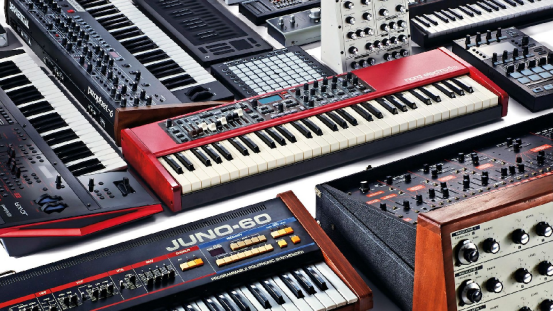
With the rapid development of technology, the intelligence of synthesizers has reached an unprecedented level. In the future, synthesizers will not only be tools, they may become the “emotional companions” of creators. Imagine that when creators are writing, synthesizers can not only analyze their styles, but also capture their emotional fluctuations, and even adapt to the creators’ preferences through machine learning. At a certain moment of creation, when the creator is in a low mood, the synthesizer can automatically adjust the timbre to make the melody have a warm and comforting feeling, and when the creator is in an excited mood, the synthesizer can create a melody full of energy. This kind of emotional interaction will not only enhance the sophistication of music creation, but may also give the music work an unprecedented “soul”.
However, this also brings up a question worth pondering: Under such a creative method, will traditional manual creation become less important? Will we gradually lose the deep understanding and emotional investment in each note in manual creation? Perhaps, in the future, music creation will no longer be limited to technology and skills, but a more intuitive and emotionally profound process. However, we should also be vigilant that technology should not replace the inner world and perception of music creators.
2. Virtual Reality and the Infinite Possibilities of Music Creation
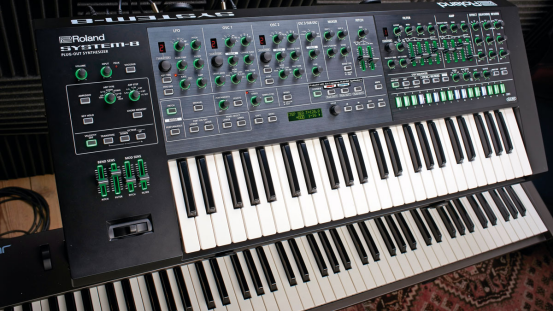
The emergence of virtual reality (VR) and augmented reality (AR) is opening a new door for music creation. Music creation in the future will no longer be limited to small studios and traditional instruments, but will soar freely in borderless virtual space. Creators can no longer rely on physical devices and interact with synthesizers through gestures, body movements, and even eye contact, as if they were in a sound world created entirely by themselves.
This change has also brought a new definition of music. In the virtual world, we no longer perceive music through our eyes and ears, but create and experience music through multi-dimensional interactions of body and emotion. Imagine that creators can control the flow of notes through senses other than “seeing” and “listening”. This wholehearted commitment can make music creation more free and vivid. However, with this infinite creation method, will the essence of music gradually become blurred? When everything can be simulated and virtualized, will the “soul” of music be lost and become more mechanized?
3. Simplified tools lower the threshold for creation
The convenience brought by technology has undoubtedly given more people the opportunity to create music. In the future, electronic synthesizers may be as simple and easy to use as smartphones, so that even people without any musical background can easily create a beautiful melody. This trend provides a more open platform for music lovers, greatly lowering the threshold for creation, allowing anyone to try to create their own music.
But this also brings up a question: Will the “uniqueness” and “originality” of creation be challenged? When everyone can easily create music, will the “artistic quality” of music be eliminated? Will we fall into a “stereotyped” creation environment, making it difficult to see works that are truly innovative and profound? This also makes us begin to reflect on whether the popularity of convenient tools also means that we have lost the “difficulty” and “challenging” that should be in music creation? How to maintain the uniqueness and artistic value of the work while pursuing creative freedom is a difficult problem that needs to be solved in future music creation.
4. Cross-border integration breaks the inherent framework of music
In the future, music creation may no longer be limited to the accumulation of melodies and harmonies, but will be more closely integrated with other art forms. The combination of music with elements such as dance, drama, and visual arts has become a trend in the development of future art. Imagine that on a stage, music is no longer just a performance of sound, but is intertwined with the movements of dancers, the lines of actors, and the changes in lighting to form a multi-dimensional artistic presentation. This creative method not only breaks the performance framework of traditional music, but also pushes the performance of art to a whole new level.
However, can the integration of technology and art really achieve a balance? In this process, are we likely to overemphasize the role of technology and ignore the connotation and spirit of music? As an art form, will music lose its original independence and purity due to excessive reliance on virtual technology? These questions are inevitable considerations for future artistic creation.
5. More delicate emotional expression, music will be more “humanized”
In the future, synthesizers will no longer be just creative tools, but will become carriers of emotional expression. Through biofeedback technology, the creator’s heartbeat, breathing, body temperature and other physiological changes will be able to directly affect the process of music creation. For example, when the creator’s heartbeat speeds up, the synthesizer may automatically speed up the rhythm, giving the work more tension; when the creator feels relaxed, the notes may become softer, creating a peaceful atmosphere. This high degree of interaction between people and technology will make music creation more vivid and “humanized”.
But will this highly emotional way of creation make music lose some of its original purity? When music works begin to be closely connected with the mood fluctuations of the creators, will we gradually lose our rational understanding of music? Can emotional music also retain its rational and logical structure, or will it fall into the dilemma of over-emotionality? These questions are worth our deep consideration.
6. Interactive performances make live music more dazzling
With the continuous advancement of technology, the forms of live music performances will become more diverse and interactive. In future concerts, the audience will no longer be a mere spectator, but a part of the performance. Through technologies such as virtual reality and motion capture, the audience’s emotions, movements and even language can affect the direction of live music. Performances are no longer fixed, but are closely linked to the audience’s real-time feedback, showing unprecedented immediacy and creativity.
However, the question arises: Will this interactivity make music performances overly entertaining? If every audience member can become part of the creation, will anyone still focus on the artistry of the music itself? Will this trend of excessive interaction make us ignore the depth and meaning of music and eventually reduce it to a superficial form of entertainment? These questions may be something that needs to be seriously considered in the future transformation of music performance methods.
7. Sustainable electronic synthesizers: a balance between environmental protection and art
With the improvement of environmental awareness, electronic synthesizers in the future may usher in a green revolution. Using environmentally friendly materials, recyclable designs and low-energy consumption technologies, future synthesizers will provide creators with greener and more sustainable creative tools. This will not only reduce the consumption of natural resources, but also provide creators with more environmentally friendly creative options.
However, can we find a balance between environmental protection and the freedom of artistic creation? When environmental protection becomes an important consideration in the design of creative tools, will we sacrifice some of the freedom and innovation required in music creation? This exploration of balance may be the core issue in the future development of electronic synthesizers.
8. Global and social music creation breaks the limits of region and culture
With the popularization of the Internet, music creation in the future will no longer be isolated. With the help of cloud technology, social platforms and other tools, musicians from all over the world can share their works, exchange inspirations, and even collaborate across borders at any time. This global creative trend has brought unprecedented opportunities for music creation, making the boundaries of creation more blurred.
However, will this globalization trend weaken the characteristics of music from different cultural backgrounds? When creators from all over the world create on the same platform, will music lose its original regional characteristics? The trend of globalization has brought opportunities for communication, but it also makes us think: Will the diversity of music and the uniqueness of culture be impacted as a result?
Summarize
The future of electronic synthesizers and music is ushering in a multi-dimensional development. It is not only the evolution of technical tools, but also the expansion of artistic expression. In this intelligent and virtual era, music creation will no longer be limited to the traditional expression framework, but will be integrated into multiple levels such as technology, emotion, culture and globalization. The music creation of the future will be more delicate, vivid and interactive, but in this process, can we maintain the original purity and spiritual depth of music? This is a question that every music creator, lover and listener needs to think about.