
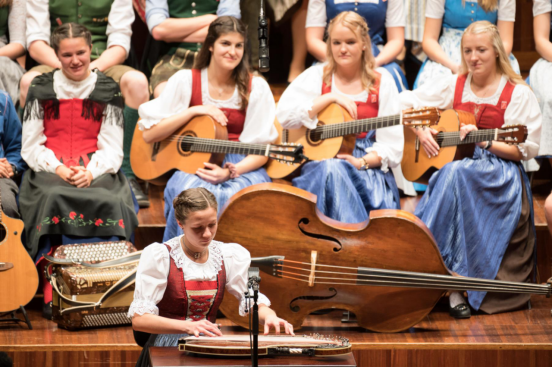
If you want to find the origin of folk music, its starting point may not be high and mighty, nor does it have gorgeous music and complex techniques. The power of folk music comes from every ordinary person and every ordinary story. It does not rely on complex musical scores or superb playing skills, but tells life in the simplest and most genuine way. Imagine sitting by a campfire, playing a simple guitar or mandolin, and singing a song softly – perhaps the lyrics are not complicated, but they can move everyone who hears it. The melodies without too much decoration are precisely because they can touch the most real emotions, because they carry the stories and voices of the people.
From all corners of the world, folk songs vary greatly in form. You can hear the country music of the southern United States, which is simple and profound, and it seems that every chord carries the breath of farmland and the loneliness of the soul; you can also hear the folk songs of southwest China, whose melodious melody contains the vastness of mountains and rivers and the simple life of people. Whether it is Western blues or Eastern folk songs, the common point of folk music is that they all come from the folk, from the hearts of ordinary people who have never been decorated by noble music.

The cultural background of folk music
Folk songs are not just music, they are the mark of every period of history and the carrier of every emotion. They accompany us through wind and rain and witness the changes of the times. Every folk song has a background. Some of them come from the years of war, and some come from the quiet countryside. Every song is a microcosm of that era and culture.
Western Folk Songs and Social Change
When we talk about Western folk songs, especially American folk songs, we have to mention the turbulent history of the 1960s. At that time, the society was turbulent, wars were continuous, and people were eager for change. Folk songs were born in this uneasy atmosphere. They are resistance, protest, and expectation for the future. Bob Dylan’s “Blowin’ in the Wind” is the most vivid example. The lyrics of this song seem simple, but they reflect the profound social contradictions and the desire for freedom, peace and equality. This is not an ordinary song, it is a voice, a symbol of a social movement. When Bob Dylan sang “Times are a-changin'” loudly on the stage, it was not just the singing of lyrics, but the cry of an era, a strong counterattack against social injustice and racial discrimination.
As a form of folk music, American country music is also deeply rooted in the lives of ordinary people. It sings about the stories of farmers, workers, and families, and those seemingly ordinary but powerful emotions – loneliness, love, loss, and belonging. Have you ever listened to a country song on a quiet night and was suddenly moved by its simplicity and affection? This is the charm of country music, which closely links personal emotions with the pulse of society.
Oriental folk songs and patriotism
Going to the East, folk songs carry another kind of cultural power. For China, folk songs are the memory of the countryside. They are sung from the fields to the mountains and rivers, telling one story after another about nature, love and family. Imagine, maybe you have heard “Ten Farewells to the Red Army”. The song conveys not only the heroism of the revolutionary period, but also a deep sense of family and country. This kind of emotion can be seen everywhere in Chinese folk songs. They may be emotional sustenance or the inheritance of history, but each song is soaked in the hard work of countless people.
Not only in China, but also in India, folk songs have a strong religious color. In India, folk songs often have a sacred meaning, and the songs are full of reverence for the gods and reflections on the sufferings of the world. You can hear the singers telling those mythological stories that transcend time and space with melodious melodies, as if every note contains profound wisdom and thoughts on life.
Latin American folk songs: confrontation and solidarity
Latin American folk songs, especially in the 1960s, also carried important political significance. During that period, many Latin American folk singers used music as a weapon to oppose dictatorships and support revolution. Chile’s Vitor Jara, with his “Plaza de Mayo”, became a representative of this historical moment. These songs contain not only emotions of resistance, but also a transmission of collective memory, reminding each generation not to forget the pain and struggle of the past. Can you feel that power? One song is enough to shake the heart of an entire country.
Brazilian samba music is full of passion and desire for freedom and liberation. Its rhythm is lively and bright, reflecting the optimism and tenacity of the Brazilian people. It is not just a musical style, it symbolizes the unyielding fighting spirit and the infinite pursuit of a better life.
African Folk Songs: Oral Tradition and Tribal Culture
In Africa, folk music is closely linked to tribal culture and oral tradition. In this land full of rhythm, folk songs are not just songs, but also the inheritance of wisdom. Each song is part of tribal history, carrying ancient stories and teachings of ancestors. You will find that African folk songs often do not have gorgeous instruments, but their rhythm and emotions can touch the heart. This tradition of collective singing is not only the bond of the tribe, but also the foundation of culture, which shows that people cherish collective memory and history.

The modern transformation of folk music
Under the wave of globalization, folk music has begun to change, but its core spirit remains unchanged. Modern folk music is no longer limited to rural fields. It transcends the boundaries of time and space and incorporates a variety of modern elements such as rock, pop, and electronic music. Have you ever heard singers who combine folk music with electronic music at a music festival? Their works are full of modernity while retaining the emotions and storytelling of folk music. This fusion not only reflects the diversity of culture, but also gives folk music new vitality in the new era.
Conclusion
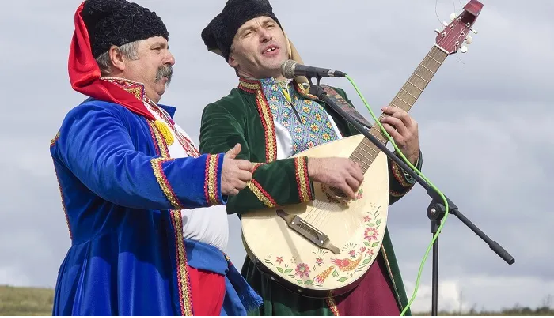
Folk music is a mirror of human culture and history, recording the pulse and emotions of every era. Whether it is social change in the West or the patriotism in the East, folk songs have always closely linked the vicissitudes of the times with the stories of ordinary people in a unique way. Today, when we listen to these songs again, they are not just music, they are the echoes of history and the collision of the hearts of every creator and listener. Folk songs will never go out of style, and their power comes from the simplest but most real emotions.