
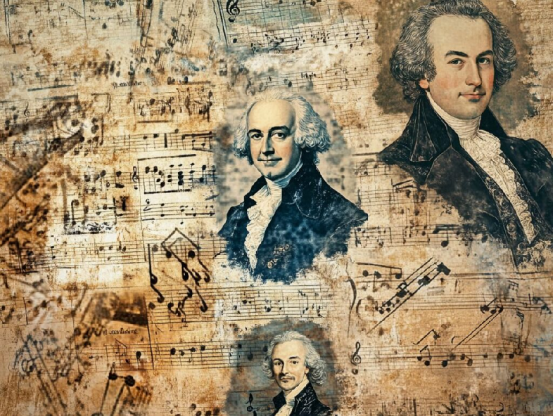
Classical music is the golden age in the history of Western music. It spanned about 90 years, from 1730 to 1820 AD, and became a bridge between Baroque and Romanticism. The music style of this era focused more on the simplicity and clarity of the melody, and the balance and elegance of the musical structure. Many classic works that are still well-known today were created by composers of this period.
In this article, we will focus on two landmark composers, CPE Bach and Ludwig van Beethoven, who not only represented the musical landscape of the Classical period, but also laid the groundwork for the subsequent Romantic wave.
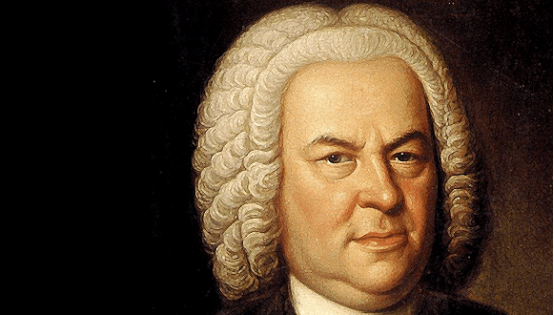
CPE Bach: Pioneer of the Classical Style
CPE Bach, as the fifth son of Baroque music master Johann Sebastian Bach, his musical talent is undoubtedly a product of his family’s inheritance. However, CPE Bach did not stick to his father’s musical tradition, but found a unique path between inheritance and innovation. His music combines the rigor of Baroque and the simplicity of Classical, but pays more attention to the expression of emotion and expressiveness, so he pioneered the “sensitive style”.
This style emphasizes the delicate expression of emotions. The performance of music is not only about form and technique, but also about the emotional fluctuations deep in the heart. CPE Bach’s works, especially his keyboard sonatas, are full of vitality and changing emotions. He is not bound by traditional rhythm and harmony structure, but adopts a freer form and dynamic rhythm, making his music more personalized and expressive. For example, in his “Sonata in E flat major”, he uses a variety of musical mood contrasts, sometimes fierce and sometimes quiet, to express the ups and downs of emotions.
In addition, CPE Bach also made outstanding contributions to the development of piano techniques, and his articles on keyboard techniques have had a far-reaching influence. It is worth mentioning that he was also one of the first composers to record his life in the form of an autobiography, which provides valuable information for future generations to understand the life and creation of 18th-century musicians.
It is no exaggeration to say that CPE Bach is one of the pioneers of classical music innovation. As Beethoven said: “Bach is the father, we are the children!” His music inspired later masters such as Haydn, Mozart and Beethoven.
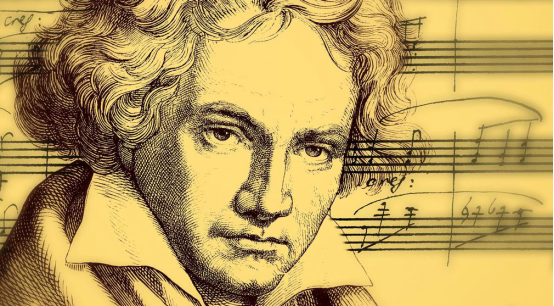
Beethoven: The bridge between classicism and romance
Beethoven is a monument in the history of classical music. His works were deeply influenced by Haydn and Mozart, and broke the traditional framework in terms of form and emotional expression, foreshadowing the arrival of romanticism. Beethoven’s music is like a torrent, breaking through the limitations of classical music and providing unlimited inspiration and possibilities for later composers.
In his early years, Beethoven created a large number of symphonies and piano sonatas influenced by the styles of Haydn and Mozart, but as time went on, he gradually abandoned the traditional structure and began to incorporate more complex emotions and personal dilemmas into his music. His Symphony No. 3 “Eroica” is a landmark work that breaks through the framework of the classical symphony, is full of revolutionary and heroic emotions, and shows Beethoven’s deep understanding of freedom and destiny.
Beethoven’s music creation was not all smooth sailing. What is most well-known is that he persisted in creating great works despite his gradual loss of hearing. It is this strong inner strength that makes his music not only a pile of melodies and harmonies, but also a true display of emotions. Especially in his late works, the depth and complexity of emotions reached an unprecedented height. For example, the “Ode to Joy” in the “Ninth Symphony” is not just a choral song, it symbolizes the desire for human unity and peace, breaking through the traditional boundaries of music and becoming a common treasure of world culture.
There are many masterpieces of Beethoven’s works, which are not only the pinnacle of classical music, but also the forerunner of romanticism. Beethoven used music to convey his personal predicament, inner struggle and courage to transcend fate. His works still deeply influence music lovers all over the world.
The legacy of classical music
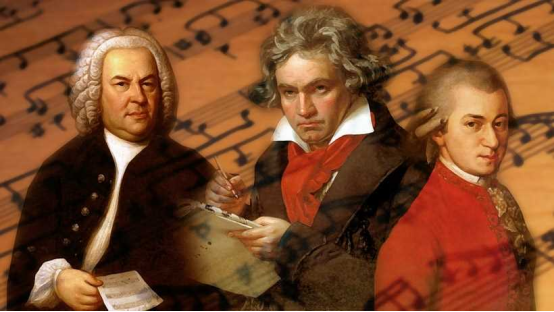
From CPE Bach to Beethoven, these two music masters laid the foundation for the development of classical music and paved the way for romantic music. The golden age of classical music is not only a flourishing art form, but also a reflection of human emotions and thoughts. As Beethoven said in his Ninth Symphony: “All good things should be sublimated in love.” The melody of classical music still echoes in every note, inspiring countless people to pursue the sublimation of the soul.
Today, when we listen to these immortal works again, we are not only appreciating the music itself, but also feeling the resonance of human emotions and thoughts of that era. Whether it is Bach’s delicate emotions or Beethoven’s heroism, they make us understand that the power of music is far beyond our imagination. It can transcend time and space and reach the depths of the soul.
Summarize
Through the introduction of CPE Bach and Beethoven, we can see how classical music has undergone a huge transformation from form to emotion. The two composers not only made great innovations in music, but also showed extraordinary persistence and courage in personal difficulties. The legacy of classical music still influences later composers and listeners, bringing endless artistic enjoyment to our lives.