
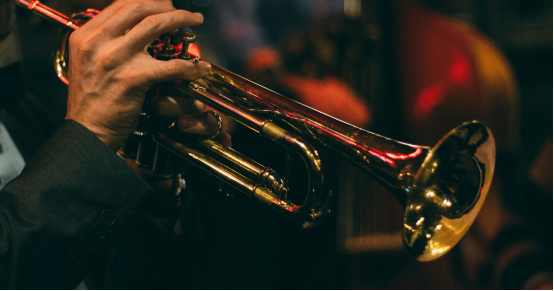
Whenever you hear the word “jazz”, what image comes to your mind? Is it a nightclub with dim lights and smoke? Or the street atmosphere of street performers playing in the wet streets of New Orleans? Perhaps you think of the eclectic rhythms of the swing dance craze? Jazz – this word may mean different things to different people. However, there is one thing in common, that is innovation.
If you ask a jazz musician what jazz brings to them, perhaps they will tell you that this kind of music is not just a performance of skills, it is a journey of dialogue with one’s inner heart. It is freedom, a way for every musician to grasp thoughts and emotions in an instant. And this is also the essence of jazz: every performance is a brand new innovation. Every improvisation is a new self-challenge, a confrontation with history and tradition, and a declaration of individual voice. Every melody seems to be asking: “How can I be different today?”

Improvisation and individualism: the driving force of innovation
The charm of jazz often comes from its unparalleled improvisation. However, behind this improvisation, there is a deeper cultural heritage. Jazz is not only a transcendence in technique, but also a release of emotion and a manifestation of independent thinking. Every jazz musician is encouraged to find and express his or her truest self. This free art form encourages musicians to explore more creative methods, discover the unique elements in their voices, and bravely show them.
Every improvisation is actually a process of self-transcendence – musicians are always asking themselves: “Can I do something different today than I did yesterday?” This endless exploration allows every jazz musician to become a creator of his or her own unique sound. This is the charm of jazz: there is no fixed template, no standard answer, only endless possibilities.
Why is improvisation the soul of jazz?
If we ask what is the innovation of jazz, then its improvisation is undoubtedly its most notable feature. The essence of this musical form is that musicians do not simply follow fixed chord progressions, but use every detail of the music to improvise. In jazz, every beat of a note and every change of rhythm are determined by the inspiration and emotion of the performer, and almost every performance is different. Because of this, jazz is full of freshness and unpredictability.
The charm of improvisation is not only reflected in the performance itself, but also in the fact that it allows the performer to show his or her true self in just a few seconds. Every performance is an emotional release and a collision of ideas. When musicians face the upcoming melody, they are not just playing music, but also having a deep dialogue with themselves, looking for their own voice. The freedom and agility of jazz lies in the fact that every performance is a challenge to the established rules and the continuous birth of freshness and uniqueness.
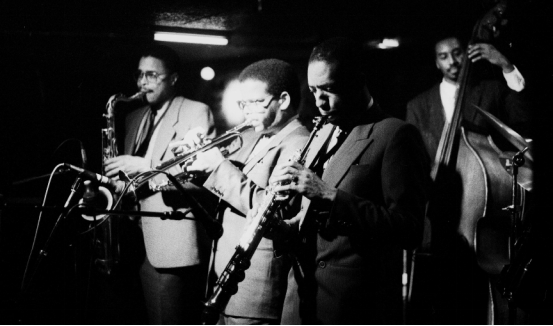
The innovation of jazz music from the perspective of legendary figures
When it comes to the innovation of jazz, we have to mention the legendary figures who changed the history of music. They are not only masters of technique, but also pioneers of innovation. Through improvisation, they pushed jazz to peaks one after another. Looking at these figures, you will find that the charm of jazz has found new definitions in their hands one after another.
Louis Armstrong, with his unique trumpet playing, makes improvisation no longer a simple display of skills, but an expression of emotions and personality. His melodies are full of the power of life, and every performance of his seems to tell us: improvisation is not only a display of skills, but also the most direct release of human emotions.
Ella Fitzgerald , her singing voice is like the sound of nature, and every note is full of the vibration of the soul. Her improvisation is not only a technical breakthrough, but also an emotional leap. What she makes people feel through music is not only the melody, but also an indescribable emotional world.
Miles Davis , his innovation in the field of jazz is not only through the breakthrough of modal jazz, but also through the boundarylessness of music, he has created a new artistic language. Miles’ improvisation is full of the spirit of exploration, and he leads us to a completely different world of music.
John Coltrane ‘s saxophone playing is an unforgettable combination of emotion and technique. The harmonic complexity he created enriched the musical language of jazz and redefined the possibilities of improvisation.
Thelonious Monk , his eclectic piano playing is both dissonant and full of conflict, yet it is impossible to look away. Monk’s improvisation filled jazz with infinite tension from harmony to rhythm, from melody to emotion.
Charlie Parker ‘s redefinition of bebop is not only a technical leap, but also a combination of speed and passion. He made jazz improvisation break through all the limits of imagination and achieved a new artistic style.
Billie Holiday , every song of hers is an emotional release. Her voice can be as soft as water and as firm as iron. Through her improvisation, she injects new emotional dimensions into jazz and opens up a new musical language.

Improvisation: Implications for Personal Growth and Other Art Forms
Jazz improvisation not only improves musicians’ art, but also has a profound impact on their personal growth and development. Every time they improvise, musicians are constantly breaking through themselves. This is not only an improvement in technique, but also a profound baptism of emotions and thoughts. On this stage full of challenges and opportunities, every jazz artist is tempering his or her psychological quality and cultivating the ability to think independently and respond quickly.
At the same time, the improvisational spirit of jazz has also profoundly influenced other art fields. In the fields of dance, visual arts, literature, film, etc., artists have borrowed the improvisational creation method of jazz and incorporated freedom, change and personal expression into their works. The creation method of jazz has broken the barriers of art forms and allowed more artists to dare to explore and innovate.
Freedom: The source of innovation in jazz
Freedom, this word has a strong symbolic meaning in American culture. And it is through freedom that jazz has inspired countless sparks of innovation. It allows every musician to break through themselves and find the most authentic way of expression. Freedom is not disorder, but a delicate balance between rules and freedom. This balance is the root of jazz’s continuous innovation and never falling behind.
For organizations and individuals eager to innovate, the jazz model undoubtedly provides an important revelation – through the balance of freedom and discipline, we can provide nutrients for innovation. Through improvisation, free expression and reflection, we may also find our own “unique voice” and bring more new possibilities to the world.