
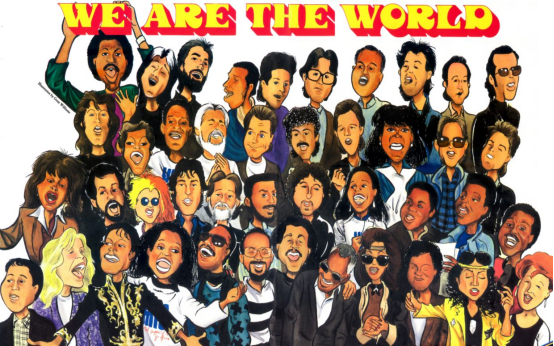
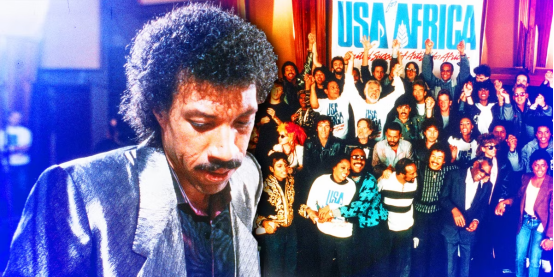
On January 28, 1985, 45 of the world’s top musicians gathered in a recording studio in Los Angeles to record the immortal charity single “We Are The World”. This was not only a musical gathering, but also a symbol of global solidarity. Many artists, including Stevie Wonder, Bruce Springsteen, Cyndi Lauper and others, raised the world’s attention to the famine in Africa with their songs. This song not only provided much-needed aid to Africa, but also made the global audience realize that solidarity and responsibility are not just slogans, they need to be transformed into practical actions.
Forty years later, the documentary “The Greatest Night in Pop Music” takes us back to that historic moment. Through in-depth interviews with the participants, we can’t help but find that this is not only a musical miracle, but also a journey full of emotional fluctuations. The doubts, tensions and excitement of the musicians during the recording process are all truly shown. Artists such as Cyndi Lauper and Kenny Loggins mentioned that they also doubted whether they could do more at the time, and sometimes even worried that they would not achieve the expected influence. This kind of uneasiness and expectation may be the unique charm of music-it can touch the soul at a critical moment, inspire the inner motivation, and become an important driving force for social change.
Music and Social Responsibility: From “Do They Know It’s Christmas?” to “We Are The World”
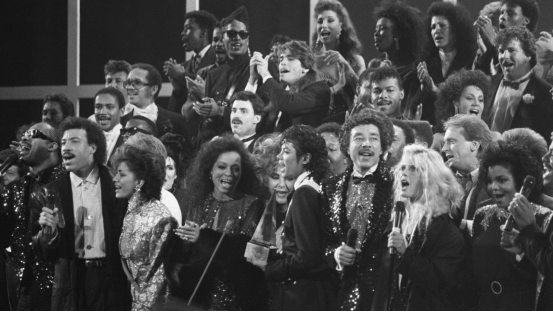
The success of “We Are The World” is often compared with “Do They Know It’s Christmas?” recorded by British and Irish musicians in the same year. Although “Do They Know It’s Christmas?” is also widely influential, it has an obvious shortcoming – the participants in the song are almost all white musicians. After seeing this, the legendary civil rights activist Harry Belafonte raised a profound question: “If white people are going to save black people, why can’t black people work together?” This remark directly touched Lionel Richie and prompted him to think about how to show a wider global cooperation through this song. In the end, he and Michael Jackson worked together to create “We Are The World”. This song not only expresses the vision of charitable assistance, but also allows black and white artists to work together to truly demonstrate the power of global solidarity.
The collaboration between Lionel Richie and Michael Jackson is not just a musical creation, it is also an ideological breakthrough. By involving musicians of different races and backgrounds, this song shows a profound message to the global audience: unity is not just superficial cooperation, but transcending cultural, racial, and even political differences to gather everyone’s strength to solve a common crisis.
Challenges and real emotions in the recording studio
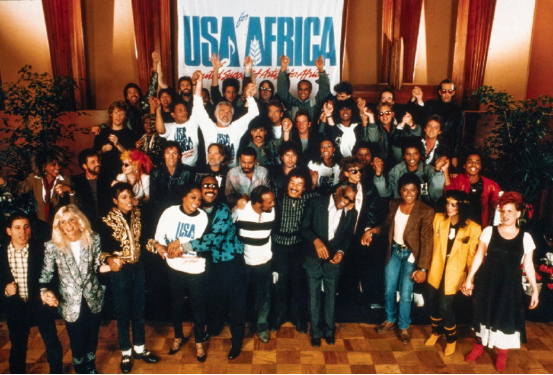
Although “We Are The World” eventually became a global hit charity single, its birth process was not smooth sailing. The emotional state of many musicians in the recording studio is not as glamorous as the outside world imagines. Bob Dylan felt uncomfortable during the recording – he was troubled by the many musicians and the tense atmosphere, and even began to doubt whether he could complete the task. At this time, Stevie Wonder stood up. He did not comfort Dylan with words, but walked directly to the piano and imitated Dylan’s voice in his own way to help him overcome his inner obstacles. This scene may be the most touching part of music – it is not only the power of melody, but also a bridge that crosses psychological barriers and connects every anxious heart.
At the same time, Sheila E’s experience also reveals the more complex emotional fluctuations behind music recording. When she learned that she was invited because the producer wanted to attract Prince through her, she could not hide her inner loss and confusion: “Why am I a tool? I should be here for music, not for others.” Despite this, Sheila E finally chose to persevere, and she understood that this was a sacrifice for a greater cause. In this atmosphere full of contradictions and struggles, these musicians are not just creating a song, they are participating in a movement to change the world.
The power of global collaboration: breaking cultural boundaries
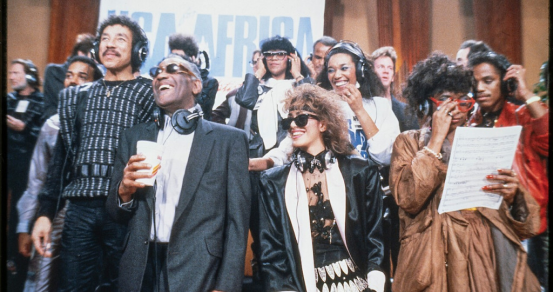
The significance of “We Are The World” goes far beyond its musical value. It demonstrates the power of global cooperation and the unique role of music in solving social problems. Through this song, artists of different backgrounds and skin colors crossed borders and united to raise funds for famine victims in Africa. This event gave us a profound revelation: music is not just an artistic expression, it is a global language that can transcend cultural, linguistic and racial barriers and connect every heart in the world.
However, in the digital age, can global cooperation still trigger a profound social response like it did in the past? Today, social media and short video platforms make it easier for top influencers and creators around the world to collaborate and launch charity projects, but can they inspire collective emotions across race, class and region like “We Are The World”? This question is still worth pondering.
Director Nguyen Thi once mentioned in an interview: “I hope this documentary and the song “We Are The World” can inspire the younger generation, and perhaps they will also try similar creations.” Perhaps in the future, the combination of music and social responsibility will continue in different ways, but whether we can witness the same emotional resonance as before is still a question worthy of our deep consideration.
Music: More than just a melody, it’s a call to action
The real value of “We Are The World” is far more than just a widely sung song. It carries a social responsibility through music, making all participants no longer just singers, but spokespersons for global solidarity and responsibility. Behind every note and every lyric is a mission to change the world. This is not only a musical creation, but also a global social movement – helping the people who need help most in the world through art.
Today, although the form and dissemination channels of music have undergone tremendous changes, it still has unparalleled power. Whether through traditional music albums or short video platforms, music can still inspire people’s emotions, transcend the divide of language, culture, and race, and gather global power. In this challenging era, perhaps each of us can become part of changing the world in our own way – whether through a song or a melody, music is still a powerful force for social change.