
Music, as a language that transcends time and space, exists in every corner of our lives. From ancient folk songs to modern electronic dance music, it is not only a sensory enjoyment for us, but also demonstrates irreplaceable social functions in education, healing and entertainment. It is like an undercurrent, quietly affecting our emotions, cognition and behavior, and shaping our relationship with the world.

Music and Education: A Deeper Enlightenment than Language
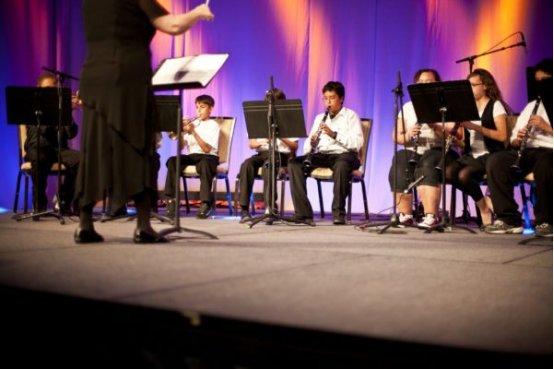
The educational function of music has a long and profound history. Can you imagine how ancient Greek philosophers could teach morality through melodies without music? Or how educators in the Renaissance could impart wisdom and humanistic spirit through musical notes? Music has been a part of education for thousands of years, and it even touches people’s hearts more directly and deeply than language.
How does music become a bridge for education? It directly enters our hearts through sound and affects our emotions and thoughts. Studies have shown that learning music can significantly improve children’s language skills, mathematical thinking and even spatial cognition. Imagine that when a primary school student learns a melody, he is actually practicing how to deal with complex rhythms and notes. This way of learning can stimulate their creativity and problem-solving ability better than simple book knowledge. The charm of music education lies in that it not only cultivates skills, but also teaches children how to perceive the world and how to express themselves.
In modern times, music education is not limited to traditional classrooms. For example, through a song, children can be taught to remember historical events, geographical knowledge, and even mathematical formulas. This combination of learning and entertainment makes people sigh that the magic of music can help us overcome the barriers of knowledge without knowing it.

Music and healing: medicine for the soul
When it comes to the function of music, we have to mention its healing effect. We live in an era full of stress and anxiety, and it seems that we are always disturbed by the noise from the outside world. However, music is like a panacea, helping us to escape from the hustle and bustle and find inner peace.
Have you ever felt a warm feeling in your heart when you listened to a song you liked when you were feeling down? Or when you felt lonely late at night, the melodious melody seemed to soothe your mood and give you the strength to keep going. Music has a magical ability to directly affect the brain and regulate our emotions and physiological responses through the combination of rhythm, melody and harmony.
The application scope of music therapy is becoming more and more extensive. It has been proven to effectively relieve stress and anxiety, and even has a significant improvement effect on patients with depression. For patients with autism, music helps them break social barriers and stimulate their inner desire to express themselves; for patients with Alzheimer’s disease, familiar melodies can evoke their long-lost memories and make them feel the long-lost emotional connection.
Music and entertainment: an outlet for releasing stress
If music has profound educational and healing functions, then its entertainment attribute is undoubtedly the most popular and influential. Whenever music plays, whether it is high-pitched rock or melodious classical music, it will instantly lead us into another state of mind. It is an emotional outlet, a silent dialogue, which allows us to release long-suppressed emotions.
Imagine a concert, with lights changing, notes flowing in the air, and everyone dancing, as if nothing can stop the power of joy. Music brings not only enjoyment to the ears, but also a release of the soul. It allows us to temporarily forget the troubles of life and enjoy the pure happiness. The entertainment of music allows us to find a piece of tranquility and joy in this fast-paced society.
More importantly, music is often a medium for social interaction. At a party or a gathering of friends, music acts as a bridge, bringing different people together. Every beating note is part of our emotional communication. Even at special moments, such as weddings and celebrations, music is a carrier of shared memories, creating a unique emotional bond in interpersonal relationships.

Music and social change: the power of sound
But the function of music is not limited to entertainment and healing, its role is far more profound than we imagine. Throughout history, music has often become a catalyst for social change. It carries the voices and emotions of countless people and drives the wheel of history forward.
Think about the song “We Shall Overcome” during the civil rights movement, how that song became the hope and strength in the hearts of thousands of black people; look at the anti-war songs in the 1960s, how they aroused people’s desire and call for peace. The power of music lies in the fact that it transcends the limitations of language, breaks the silence of society with the power of emotion, and promotes the progress of human history.
Today, we can still find the power of social change in music. Whether it is a song supporting gender equality or a melody against racial discrimination, music has always been at the forefront of society, becoming a tool for expressing emotions and conveying ideas. And it is this sound that has gradually gathered into a powerful force, driving us to continue to pursue a better world.
Conclusion: Music – our common language
Looking back at history, music is not just a sensory enjoyment, its social function has long exceeded our imagination. From educational enlightenment, healing comfort, to entertainment pleasure, and the promotion of social change, music is closely related to us all the time. It is the common language of human society, transcending time and space, connecting different cultures and individuals.
In the future, the function of music may continue to expand, but in any case, it will always be the soothing of our souls, the expression of our emotions, and the witness of society. So, next time when you feel tired in your busy life, why not give yourself some time, close your eyes, listen to that song, relax, and let the music take you to a whole new world.