
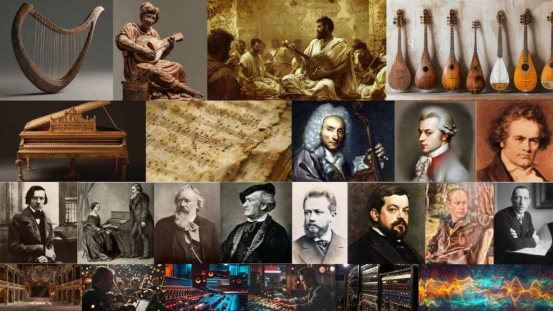
Music is fluid, and it continues to evolve with the changes of the times, the collision of cultures, and the advancement of technology. Looking back at history, the original form of music was so primitive and simple, but full of power. One can’t help but wonder: what makes such simple notes arouse such a strong resonance?
Going back to Babylon around 1400 BC, we found one of the earliest musical symbols. The ancient Greeks also developed a musical symbol system around the 6th century BC. These symbols were not just a tool for entertainment. They often accompanied religious ceremonies or social activities and became part of group identity. Does music at this time already contain the power that transcends time and space? We can’t help but ask, what made this form profoundly influence the art and society of later generations?
As cultures emerged from different regions, musical styles gradually diversified. African music, with its complex rhythms and strong emotional expressions, influenced the formation of spirituals and folk music. At the same time, music from Asia, especially China and India, conveyed philosophical ideas through unique scales and melodies. Can these traditional forms be said to have laid the foundation for the later structured development of Western music?

The Rise of Western Music: From the Middle Ages to Classical
The rise of Western music began in the Middle Ages, when music was no longer limited to religious ceremonies, but gradually entered social occasions such as courts and banquets. Around 1000 AD, Guido Darezzo invented the modern musical notation system, and Western music entered a new chapter. The Baroque and Romanticism of the Classical Period are like flames lit in the torrent of time. Although they seem short-lived, they have a profound impact on music. The works of Mozart and Beethoven not only shaped the golden age of Western music, but also made us wonder: Can these notes still shake the strings in our hearts across centuries?
20th Century Innovation: The Birth of Jazz and Rock
At the beginning of the 20th century, the rise of jazz and blues brought what changes to Western music? They broke the framework of traditional music and introduced elements of improvisation and emotional expression. Jazz is not only music, but also a portrayal of life and a profound exploration of freedom and self. We can’t help but ask, why is jazz so attractive? Is it the freedom of improvisation, or the unique charm it exudes?
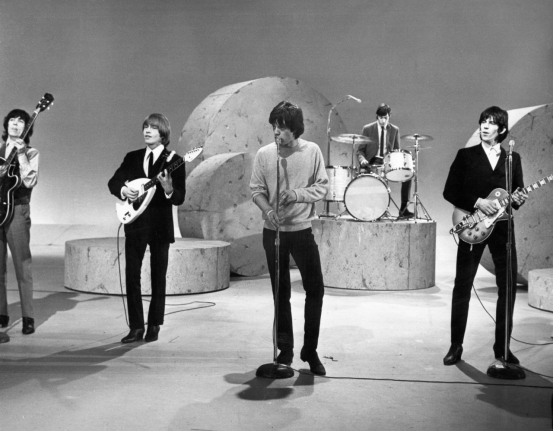
The advent of rock and roll was a different story. Its roots came from the 1950s, blending blues, rhythm and blues, and country music to capture the spirit of youth, rebellion, and freedom. Watching Elvis Presley and Chuck Berry bring rock and roll into the mainstream, we can’t help but wonder: Is the charm of rock and roll just the shocking sound of guitars and crazy rhythms? Does it also represent the rebellion against order and tradition at that time?
As rock music continues to develop, it is no longer limited to a certain style. Punk, heavy metal, alternative rock and other branches continue to emerge, and each new attempt is proving the infinite vitality and innovative potential of rock music. Look at the alternative rock in the 1990s. How come it is “contrary” to the mainstream music style? Doesn’t this rebellious spirit deeply touch the desire for freedom in each of our hearts?
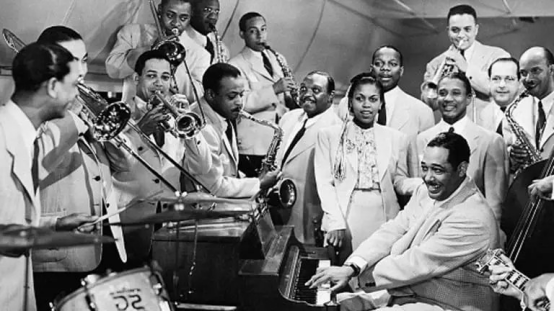
The charm of jazz: improvisation and depth
The rise of jazz seems to be a call of the times. It originated in New Orleans in the late 19th and early 20th centuries, when blues and ragtime laid the foundation for the formation of jazz. Who would have thought that Louis Armstrong and Duke Ellington, who are familiar to us today, left such a deep mark on jazz with their improvisation and complex rhythms. Is the freedom of improvisation really the unique magic of jazz? Every improvisation is the release of the artist’s soul, and isn’t it also a profound expression of life?
The rise of electronic music: the digital revolution
When it comes to electronic music, do you wonder: can the combination of technology and art really bring such a shocking effect? At the end of the 20th century, with the breakthrough of electronic technology, electronic music began to take shape. The synthesizers and drum machines of the past have become the music tools we are familiar with today. From the pioneering works of Kraftwerk to the innovations of Daft Punk and Deadmau5 today, every electronic music artist is challenging the boundaries of music. So, what kind of auditory experience does electronic music give us? Why can it leap from an experimental niche culture to the mainstream force of the global music industry?
Hip-hop: cultural expression and social reflection
Isn’t the origin of hip-hop music a cultural expression of “marginal groups”? Its birth and development are inseparable from the life experiences of African Americans and Latino groups in the Bronx, New York in the 1970s. Hip-hop is not just music, it is a symbol of culture, attitude and rebellion. With the participation of Grandmaster Flash and The Sugarhill Gang, hip-hop music quickly occupied the mainstream. In the 1990s, the works of artists such as Tupac Shakur and Notorious BIG became the epitome of the times. We have to think about whether hip-hop music is no longer just a simple accumulation of melody and rhythm, but a carrier of deep thinking and reflection on society?
Conclusion: The power and future of music
The evolution of music genres is full of ups and downs and thrilling stories. Every melody and every rhythm carries the cultural background and emotional fluctuations of an era. Through this article, can we understand more clearly that the power of music lies not only in its notes and rhythms, but also in the historical and cultural significance it carries?
Just as today’s music genres are increasingly blending and evolving, the future music world may bring more surprises and challenges. The collision and fusion of different styles may be the greatest charm given to music in this era. Can each of us find our own rhythm in this wave of music?