
Initial Formation Period:
The word symphony comes from the Greek word “symphonia”, which originally means “sounds ringing together”. This concept aptly summarizes the core of symphony: the fusion and dialogue of multiple sounds. In fact, symphony did not have its current appearance from the beginning. Its predecessor was the Italian opera overture (sinfonia) in the Baroque period. At the end of the 17th century, the overture of Italian opera underwent a transformation and gradually evolved into the prototype of symphony. It is worth mentioning that the Italian composer Alessandro Scarlatti played a pivotal role in this. He finalized the original simple overture into a three-part structure of “fast-slow-fast”, setting the tone for the symphony. It is conceivable that the proposal of this new structure must have brought a shock to the music world at that time! This development undoubtedly laid a solid foundation for the prototype of symphony. From then on, symphony gradually surpassed the Baroque-style orchestral concerto and became an indispensable protagonist in concerts.

Classical period:
Around 1750, the history of Western music ushered in the dawn of classicism. It can be said that this was a period when musical language and form were completely renewed. We can see that the “Mannheim School” represented by the German composer Stamitz proposed a more standardized concept of symphony creation, applying the sonata form to the first movement of the symphony, which greatly promoted the development of this genre. Compared with the early symphonies, the symphonies of the classical period appear more rigorous and rich. More importantly, Stamitz and others gradually established the basic form of four movements for the symphony. So, how did this innovation affect later composers?
The answer is undoubtedly: far-reaching! Especially with the rise of the Vienna School, the arrival of Haydn, Mozart, and Beethoven, the face of the symphony has changed dramatically. Haydn and Mozart made exquisite use of sonata form and variation form in their creation, making the symphony more dramatic and emotional. And Beethoven, without a doubt, pushed the symphony to a new peak. On the basis of inheriting the classical style, he added a strong personality and revolutionary spirit, completely changing the language and structure of the symphony. Imagine what the symphony would be like without Beethoven? His contribution may be beyond words.

The four-movement structure of a classical symphony has almost become a classic template:
The first movement: Sonata form, full of vitality and drama, where two opposing themes unfold and collide, interpreting the cause, development and result of the contradiction.
The second movement: three-part or variation form, with a slow and lyrical melody, as if expressing deep thoughts on life and the accumulation of philosophy.
The third movement: minuet or scherzo, the music reveals a hint of ease and joy, as if it is relaxation and entertainment after the contradiction.
The fourth movement: rondo or sonata form, with a victorious and festive atmosphere, showing an optimistic and positive attitude.
Each movement is like a vivid painting, leading us through different emotional worlds.
Romantic period:
Entering the middle of the 18th century, the rise of romanticism brought another breakthrough in the form of symphony. During this period, music was no longer just a display of structure, but an expression of personal emotions and thoughts. Symphonies began to become more free, and the form structure was no longer bound by tradition. The number and structure of movements were more flexible. For example, we can see that a symphony consists of five, six or even seven movements. The creations of musicians focus on expressing personal emotions and life experiences, and often even give the works “titles” or “literary” connotations. Representatives of the romantic school, such as Schubert, Schumann, Brahms, Mahler and Berlioz, injected a strong romantic atmosphere into the symphony and pushed the emotional tension to the extreme. Imagine, when we hear those passionate and introspective melodies, will we be moved?
Modern Music Period:
In the 20th century, symphony entered an era of diversification and personalization. Influenced by modernism, impressionism, expressionism and other musical trends, the form of symphony became freer, and the sound effects were complex and varied. The composer’s creative concept was no longer bound by the traditional movement structure, and the musical language broke through the old boundaries. The works of composers such as Debussy, Stravinsky, Schoenberg, and Shostakovich showed a high degree of innovation and experimentalism. It can be said that modern symphony is an adventure that constantly challenges conventions. Each work is trying to go beyond the framework of the past and touch the unknown. Can you imagine the shock of such a symphony?

Instruments of the symphony orchestra:
Each part of the symphony orchestra has its unique role, just like a large, collaborative team. Only when each part plays its role can the grand piece of music be completed.
Strings:
As the core of the orchestra, the string group has rich timbre variations, from the agility of the violin to the depth of the double bass, and each instrument can play the most delicate emotions. As the main force of the melody, will the violin make you intoxicated by its melodious timbre? The cello and double bass are like the foundation of music, steadily supporting the sound of the orchestra and creating a steady and profound feeling.
Woodwind instruments:
Woodwind instruments add layers and depth to the symphony with their unique colors. The flute is clear and high-pitched, the oboe is penetrating, and the clarinet is as gentle as a song. Doesn’t it remind you of a melodic dialogue in a symphony? They often bring a hint of melancholy and romance to the music, as if telling the innermost desire and confusion of human beings.
Brass instruments:
The power of brass instruments is unquestionable. The timbre of trumpets, French horns and trombones can often quickly attract the audience’s attention, especially those powerful horn sounds, which can give you an irresistible sense of power? Their role is often to bring about the climax and dramatic tension of the music at critical moments.
Percussion:
Percussion instruments add rhythmic driving force and rich timbre to the entire symphony. Timpani, cymbals, snare drums, etc., each hit is precise and powerful, as if guided by the rhythm, leading us into another sensory world. Percussion is almost the “rhythmic soul” of the symphony.
Structure of a symphony orchestra:
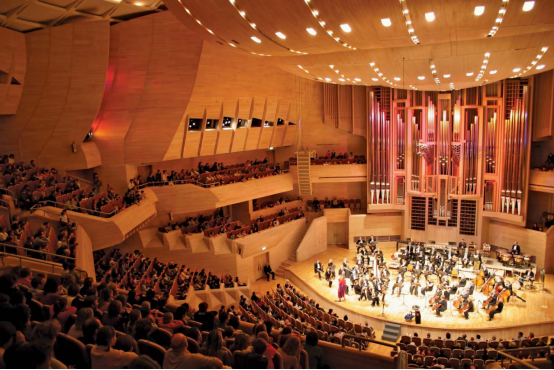
The structure of a symphony orchestra is well-organized, like a precision machine, in which every part is crucial.
Conductor:
The conductor is undoubtedly the soul of the orchestra. They use the baton to maintain the rhythm and guide the orchestra into different emotional realms. The conductor’s expressiveness determines the atmosphere of the symphony – whether it is the climax of passion or the calm and melodious meditation, every movement of the conductor is closely related to the emotion of the music.
Concertmaster:
The concertmaster is not only the leader of the violin section, but also a bridge for communication with the conductor. More importantly, the concertmaster’s performance often determines the performance direction of the entire piece. Can you feel the power and delicacy hidden in his bow and string?
Department leaders and musicians:
Each instrument group has its own leader who is responsible for coordinating the cooperation of the group members. All musicians, like gears, must work closely together to produce the most beautiful musical effect. Have you ever thought that it is these tacit cooperation and silent coordination that make the performance of the symphony flawless?
Seating arrangement:
The seating arrangement of the orchestra is designed to optimize the layering and balance of the sound. The position of each instrument group has been carefully designed. Imagine that the sound of the strings comes from the front row, the power of the brass comes from the back row, and the delicate sound of the woodwind is just right. Each sound finds its own place in this structure, which is harmonious and full of tension.

Ending:
Through the exploration of the historical evolution of symphony, the composition of instruments and the structure of the orchestra, we can not only have a deeper understanding of the rich connotation of this art form, but also feel the endless emotions and thoughts conveyed by the symphony. From the initial Italian opera overture, to the glory of the classical period, to the innovation of romance and modernity, each historical stage has given the symphony new life and a new look. Each symphony is the crystallization of the composer’s emotions and thoughts. The delicate strings, the soft woodwinds, the loud brass and the rhythm of percussion are all integrated into an audio-visual feast under the concerto of the orchestra.
The charm of symphony lies not only in its grandeur and complexity, but also in the eternal resonance behind the musical language it displays. It is a microcosm of human emotions, and our response to the emotions and reflections of life, nature, and the depths of our souls. In today’s era of information fragmentation, is it possible to sit down quietly one night and listen to a symphony to regain the long-lost tranquility and depth?
Whether you are new to symphony or already have some understanding of it, the world of symphony is always full of endless space for exploration. Every performance is a fresh journey that takes you into a different world of music. So, next time you walk into a concert hall, why not put down all the noise, close your eyes, and let the melodious melody lead you to fly – this is the real charm of symphony.